
13 算法题
时间复杂度与空间复杂度基本概念
什么是复杂度
- 程序执行需要的计算量和内存空间
- 复杂度是数量级(方便记忆推广)不是具体的数字
- 一般针对一个具体的算法,而非一个完整的系统
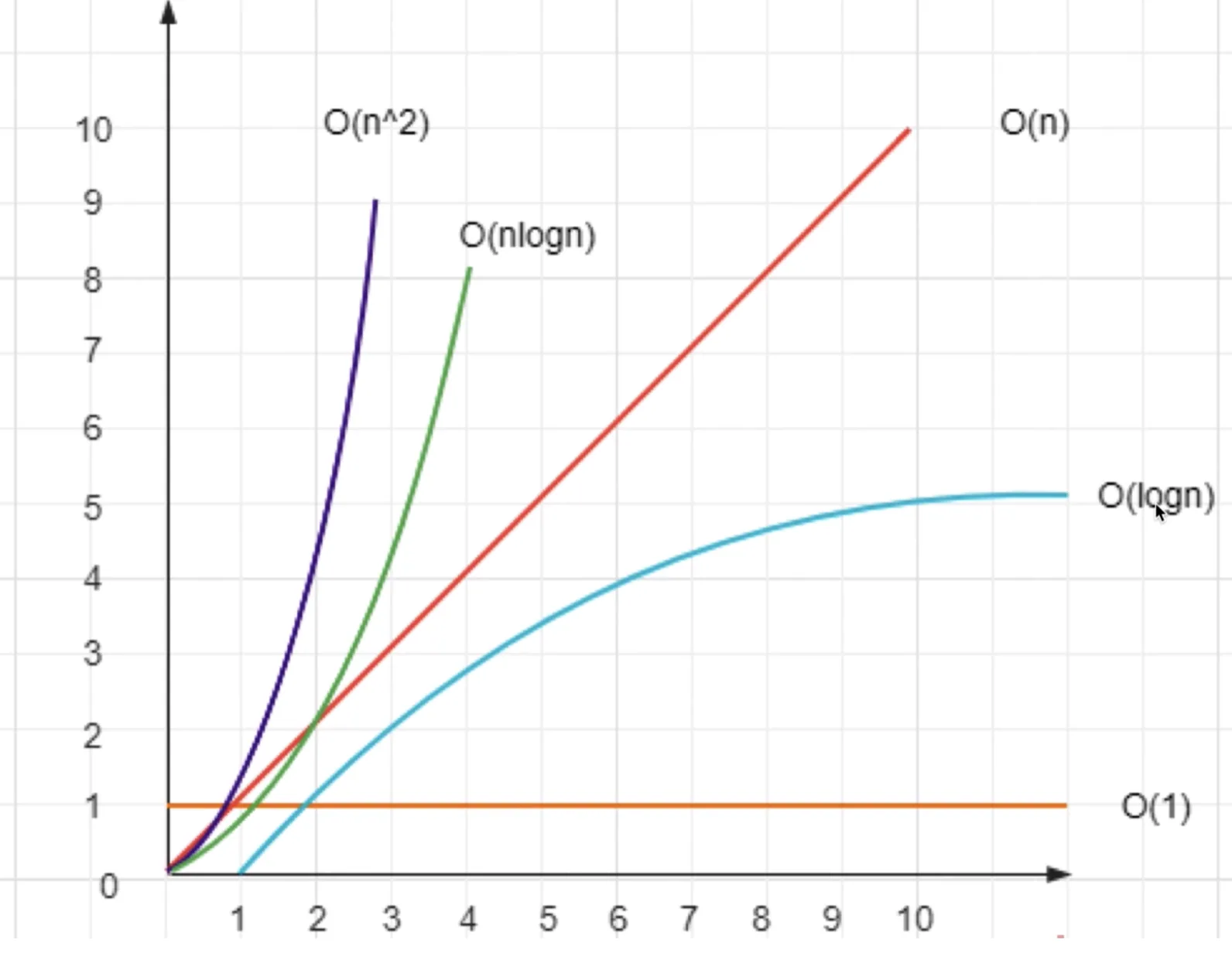
时间复杂度-程序执行时需要的计算量(CPU)
O(n)一次就够(数量级)O(n)和传输的数据一样(数量级)O(n^2)数据量的平方(数量级)O(logn)数据量的对数(数量级)O(n*logn)数据量*数据量的对数(数量级)
    function fn1(obj) {
      // O(1)
      return obj.a + obj.b
    }

    function fn2(arr) {
      // O(n)
      for(let i = 0;i<arr.length;i++) {
        // 一层for循环
      }
    }

    function fn3(arr) {
      // O(n^2)
      for(let i = 0;i<arr.length;i++) {
        for(let j = 0;i<arr.length;j++) {
          // 二层for循环
        }
      }
    }

    function fn4(arr) {
      // 二分 O(logn)
      for() {

      }
    }
空间复杂度-程序执行时需要的内存空间
O(1)有限的、可数的空间(数量级)O(n)和输入的数据量相同的空间(数量级)
实现数字千分位格式化
- 将数字千分位格式化,输出字符串
- 如输入数字
13050100输出13,050,100 - 注意:逆序判断(从后往前判断)
思路分析
- 转化为数组,
reverse,每三位拆分 - 使用正则表达式
- 使用字符串拆分
性能分析
- 使用数组,转化影响性能
- 使用正则表达式,性能较差
- 使用字符串性能较好,推荐答案
划重点
- 顺序,从尾到头
- 尽量不要转化数据结构
- 慎用正则表达式,性能较慢
    /**
     * 千分位格式化(使用数组)
     * @param n number
     */
    function format1(n) {
      n = Math.floor(n) // 只考虑整数

      const s = n.toString() // 13050100
      const arr = s.split('').reverse() // 反转数组逆序判断,从尾到头 00105031
      return arr.reduce((prev, val, index) => {
        // 分析
        // index = 0   prev = ''           val = '0'      return '0'
        // index = 1   prev = '0'          val = '0'      return '00'
        // index = 2   prev = '00'         val = '1'      return '100'
        // index = 3   prev = '100'        val = '0'      return '0,100'
        // index = 4   prev = '0,100'      val = '5'      return '50,100'
        // index = 5   prev = '50,100'     val = '0'      return '050,100'
        // index = 6   prev = '050,100'    val = '3'      return '3,050,100'
        // index = 7   prev = '3,050,100'  val = '1'      return '13,050,100'
        if (index % 3 === 0) { //每隔三位加一个逗号
          if (prev) {
            return val + ',' + prev
          } else {
            return val
          }
        } else {
          return val + prev
        }
      }, '')
    }
获取1-10000之前所有的对称数(回文数)
- 求
1-10000之间所有的对称数(回文) - 例如:
0,1,2,11,22,101,232,1221...
思路分析
- 思路1:使用数组反转比较
- 数字转为字符串,在转为数组
- 数组
reverse,在join为字符串 - 前后字符串进行对比
- 看似是
O(n),但数组转换、操作都需要时间,所以慢
- 思路2:字符串前后比较
- 数字转为字符串
- 字符串头尾字符比较
- 思路2 vs 思路3,直接操作数字更快
- 思路3:生成翻转数
- 使用
%和Math.floor()生成翻转数 - 前后数字进行对比
- 全程操作数字,没有字符串类型
- 使用
总结
- 尽量不要转换数据结构,尤其是数组这种有序结构
- 尽量不要用内置API,如
reverse等不好识别复杂度 - 数字操作最快,其次是字符串
    /**
     * 查询 1-max 的所有对称数(数组反转)
     * @param max 最大值
     */
    function findPalindromeNumbers1(max) {
      const res = []
      if (max <= 0) return res

      for (let i = 1; i <= max; i++) {
        // 转换为字符串,转换为数组,再反转,比较
        const s = i.toString()
        if (s === s.split('').reverse().join('')) { // 反过来看是否和之前的一样就是回文
          res.push(i)
        }
      }

      return res
    }
实现快速排序并说明时间复杂度
思路分析
- 找到中间位置
midValue - 遍历数组,小于
midValue放在left,否则放在right - 继续递归,最后
concat拼接返回 - 使用
splice会修改原数组,使用slice不会修改原数组(推荐) - 一层遍历+二分的时间复杂度是
O(nlogn)
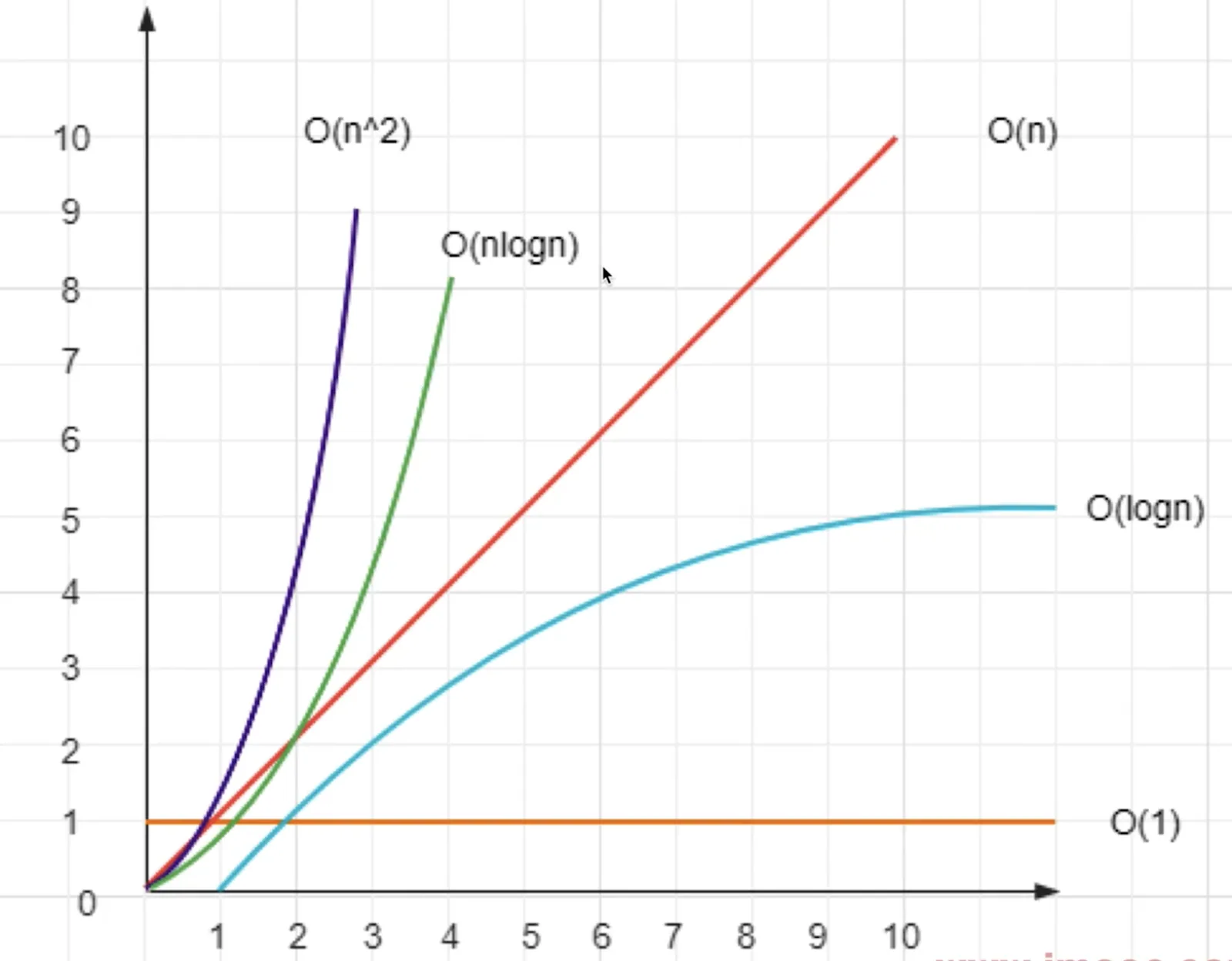
快速排序(使用 splice)
    /**
     * 快速排序(使用 splice)
     * @param arr:number[] number arr
     */
    function quickSort1(arr) {
      const length = arr.length
      if (length === 0) return arr

      // 获取中间的数
      const midIndex = Math.floor(length / 2)
      const midValue = arr.splice(midIndex, 1)[0] // splice会修改原数组,传入开始位置和长度是1

      const left = []
      const right = []

      // 注意:这里不用直接用 length ,而是用 arr.length 。因为 arr 已经被 splice 给修改了
      for (let i = 0; i < arr.length; i++) {
        const n = arr[i]
        if (n < midValue) {
          // 小于 midValue ,则放在 left
          left.push(n)
        } else {
          // 大于 midValue ,则放在 right
          right.push(n)
        }
      }

      return quickSort1(left).concat([midValue], quickSort1(right))
    }
快速排序(使用 slice)
    /**
     * 快速排序(使用 slice)
     * @param arr number arr
     */
    function quickSort2(arr) {
      const length = arr.length
      if (length === 0) return arr

      // 获取中间的数
      const midIndex = Math.floor(length / 2)
      const midValue = arr.slice(midIndex, midIndex + 1)[0] // 使用slice不会修改原数组,传入开始位置和结束位置

      const left = []
      const right = []

      for (let i = 0; i < length; i++) {
        if (i !== midIndex) { // 这里要忽略掉midValue
          const n = arr[i]
          if (n < midValue) {
            // 小于 midValue ,则放在 left
            left.push(n)
          } else {
            // 大于 midValue ,则放在 right
            right.push(n)
          }
        }
      }

      return quickSort2(left).concat([midValue], quickSort2(right))
    }
    // 功能测试
    const arr1 = [1, 6, 2, 7, 3, 8, 4, 9, 5]
    console.info(quickSort2(arr1))
    // 性能测试

    // 快速排序(使用 splice)
    const arr1 = []
    for (let i = 0; i < 10 * 10000; i++) {
      arr1.push(Math.floor(Math.random() * 1000))
    }
    console.time('quickSort1')
    quickSort1(arr1)
    console.timeEnd('quickSort1') // 74ms

    // 快速排序(使用 slice)
    const arr2 = []
    for (let i = 0; i < 10 * 10000; i++) {
      arr2.push(Math.floor(Math.random() * 1000))
    }
    console.time('quickSort2')
    quickSort2(arr2)
    console.timeEnd('quickSort2') // 82ms
将数组中的0移动到末尾
- 如输入
[1,0,3,0,11,0]输出[1,3,11,0,0,0] - 只移动
0其他顺序不变 - 必须在原数组进行操作
如果不限制“必须在原数组进行操作”
- 定义
part1,part2两个数组 - 遍历数组,非
0push到part1,0push到part2 - 返回合并
part1.concat(part2)
思路分析
- 嵌套循环:传统思路
- 遇到
0push到数组末尾 - 用
splice截取当前元素 - 时间复杂度是
O(n^2)算法基本不可用(splice移动数组元素复杂度是O(n),for循环遍历数组复杂度是O(n),整体是O(n^2)) - 数组是连续存储空间,要慎用
shift、unshift、splice等API
- 遇到
- 双指针方式:解决嵌套循环的一个非常有效的方式
- 定义
j指向第一个0,i指向j后面的第一个非0 - 交换
i和j的值,继续向后移动 - 只遍历一次,所以时间复杂度是
O(n)
- 定义
移动 0 到数组的末尾(嵌套循环)
/**
* 移动 0 到数组的末尾(嵌套循环)
* @param arr:number[] number arr
*/
function moveZero1(arr) {
const length = arr.length
if (length === 0) return
let zeroLength = 0
// 时间复杂度O(n^2)
// 
for (let i = 0; i < length - zeroLength; i++) {
if (arr[i] === 0) {
arr.push(0) // 放到结尾
arr.splice(i, 1) // 在i的位置删除一个元素 splice本身就有 O(n) 复杂度
// [1,0,0,0,1,0] 截取了0需要把i重新回到1的位置
i-- // 数组截取了一个元素,i 要递减,否则连续 0 就会有错误
zeroLength++ // 累加 0 的长度
}
}
}
移动 0 到数组末尾(双指针)
/**
* 移动 0 到数组末尾(双指针)
* @param arr:number[] number arr
*/
function moveZero2(arr) {
const length = arr.length
if (length === 0) return
// 
// [1,0,0,1,1,0] j指向0 i指向j后面的第一个非0(1),然后j和i交换位置,同时移动指针
let i // i指向j后面的第一个非0
let j = -1 // 指向第一个 0,索引未知先设置为-1
for (i = 0; i < length; i++) {
// 第一个 0
if (arr[i] === 0) {
if (j < 0) {
j = i // j一开始指向第一个0,后面不会执行这里了
}
}
// arr[i]不是0的情况
if (arr[i] !== 0 && j >= 0) {
// 交换数值
const n = arr[i] // 临时变量,指向非0的值
arr[i] = arr[j] // 把arr[j]指向0的值交换给arr[i]
arr[j] = n // 把arr[i]指向非0的值交换给arr[j]
j++ // 指针向后移动
}
}
}
    // 功能测试
    const arr = [1, 0, 3, 4, 0, 0, 11, 0]
    moveZero2(arr)
    console.log(arr)
    // 性能测试

    // 移动 0 到数组的末尾(嵌套循环)
    const arr1 = []
    for (let i = 0; i < 20 * 10000; i++) {
      if (i % 10 === 0) {
        arr1.push(0)
      } else {
        arr1.push(i)
      }
    }
    console.time('moveZero1')
    moveZero1(arr1)
    console.timeEnd('moveZero1') // 262ms

    // 移动 0 到数组末尾(双指针)
    const arr2 = []
    for (let i = 0; i < 20 * 10000; i++) {
      if (i % 10 === 0) {
        arr2.push(0)
      } else {
        arr2.push(i)
      }
    }
    console.time('moveZero2')
    moveZero2(arr2)
    console.timeEnd('moveZero2') // 3ms

    // 结论:双指针方式优于嵌套循环方式
求斐波那契数列的第n值
- 计算斐波那契数列的第n值
- 注意时间复杂度
分析
f(0) = 0f(1) = 1f(n) = f(n - 1) + f(n - 2)结果=前一个数+前两个数 0 1 1 2 3 5 8 13 21 34 ...
1. 斐波那契数列(递归)
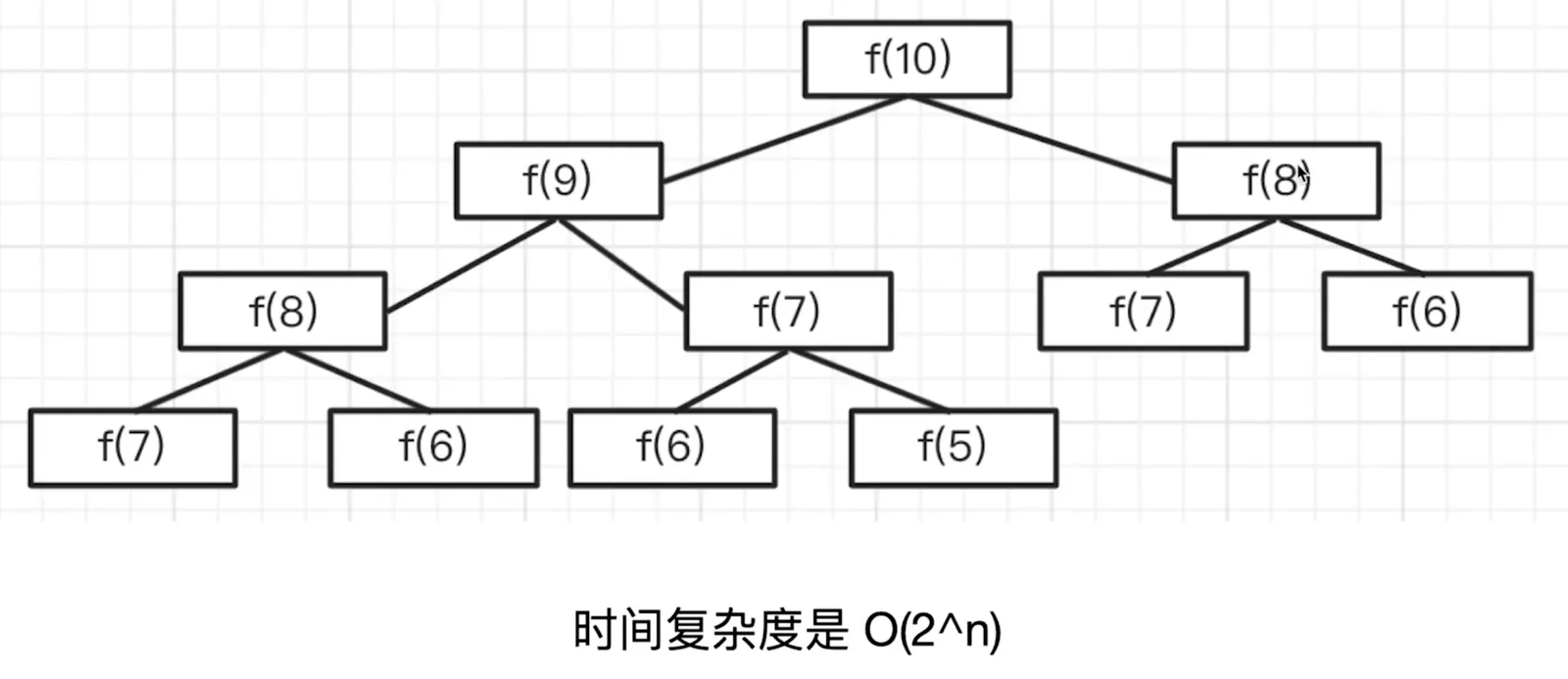
- 递归,大量重复计算,时间复杂度
O(2^n),n越大越慢可能崩溃,完全不可用
    /**
     * 斐波那契数列(递归)时间复杂度O(2^n),n越大越慢可能崩溃
     * @param n:number n
     */
    function fibonacci(n) {
      if (n <= 0) return 0
      if (n === 1) return 1

      return fibonacci(n - 1) + fibonacci(n - 2)
    }
    // 功能测试
    console.log(fibonacci(10)) // 55
    // 如果是递归的话n越大 可能会崩溃
拓展-动态规划
- 把一个大问题拆为一个小问题,逐级向下拆解
f(n) = f(n - 1) + f(n - 2) - 用递归的思路去分析问题,再改为循环来实现
- 算法三大思维:贪心、二分、动态规划
2. 拓展:青蛙跳台阶
- 一只青蛙,一次可跳一级,也可跳两级
- 请问:青蛙一次跳上n级台阶,有多少种方式
用动态归还分析问题
f(1) = 1一次跳一级f(2) = 2一次跳二级f(n) = f(n - 1) + f(n - 2)跳n级
3. 斐波那契数列(循环)
- 不用递归,用循环
- 记录中间结果
- 优化后时间复杂度
O(n)
/**
* 斐波那契数列(循环)
* @param n:number n
*/
function fibonacci(n) {
if (n <= 0) return 0
if (n === 1) return 1
// 
let n1 = 1 // 记录 n-1 的结果
let n2 = 0 // 记录 n-2 的结果
// n1、n2整体往后移动
let res = 0 // 记录当前累加结果
// 从2开始才能计算和相加 0 1是固定的
for (let i = 2; i <= n; i++) {
res = n1 + n2 // 计算当前结果
// 记录中间结果,下一次循环使用
n2 = n1 // 更新n2的值为n1的 往后移动累加
n1 = res // n1是累加的结果
}
return res
}
    // 功能测试
    console.log(fibonacci(10)) // 55
    // 不会导致崩溃
给一个数组,找出其中和为n的两个元素(两数之和)
- 有一个递增数组
[1,2,4,7,11,15]和一个n=15 - 数组中有两个数,和是
n。即4 + 11 = 15 - 写一个函数,找出这两个数
思路分析
- 嵌套循环,找到一个数,然后去遍历下一个数,求和判断,时间复杂度是
O(n^2)基本不可用 - 双指针方式,时间复杂度降低到
O(n)- 定义
i指向头 - 定义
j指向尾 - 求
arr[i] + arr[j]的和,如果大于n,则j向前移动j--,如果小于n,则i向后移动i++
- 定义
- 优化
嵌套循环,可以考虑双指针
寻找和为 n 的两个数(嵌套循环)
    /**
     * 寻找和为 n 的两个数(嵌套循环)
     * @param arr arr:number[]
     * @param n n:number
     */
    function findTowNumbers1(arr, n) {
      const res = []

      const length = arr.length
      if (length === 0) return res

      // 时间复杂度 O(n^2)
      for (let i = 0; i < length - 1; i++) {
        const n1 = arr[i]
        let flag = false // 是否得到了结果(两个数加起来等于n)

        // j从i + 1开始,获取第二个数n2
        for (let j = i + 1; j < length; j++) {
          const n2 = arr[j]

          if (n1 + n2 === n) {
            res.push(n1)
            res.push(n2)
            flag = true
            break // 调出循环
          }
        }

        // 调出循环
        if (flag) break
      }

      return res
    }
查找和为 n 的两个数(双指针)
随便找两个数,如果和大于
n的话,则需要向前寻找,如果小于n的话,则需要向后寻找 --二分的思想
/**
* 查找和为 n 的两个数(双指针)
* @param arr arr:number[]
* @param n n:number
*/
function findTowNumbers2(arr, n) {
const res = []
const length = arr.length
if (length === 0) return res
// 
let i = 0 // 定义i指向头
let j = length - 1 // 定义j指向尾
// 求arr[i] + arr[j]的和,如果大于n,则j向前移动j--,如果小于n,则i向后移动i++
// 时间复杂度 O(n)
while (i < j) {
const n1 = arr[i]
const n2 = arr[j]
const sum = n1 + n2
if (sum > n) { //sum 大于 n ,则 j 要向前移动
j--
} else if (sum < n) { // sum 小于 n ,则 i 要向后移动
i++
} else {
// 相等
res.push(n1)
res.push(n2)
break
}
}
return res
}
    // 功能测试
    const arr = [1, 2,1, 2,1, 2,1, 2,1, 2,1, 2,1, 2,1, 2,1, 2,1, 2,1, 2,1, 2,1, 2,1, 2, 4, 7, 11, 15]
    console.info(findTowNumbers2(arr, 15))
    // 性能测试

    // 寻找和为 n 的两个数(嵌套循环)
    console.time('findTowNumbers1')
    for (let i = 0; i < 100 * 10000; i++) {
        findTowNumbers1(arr, 15)
    }
    console.timeEnd('findTowNumbers1') // 730ms

    // 查找和为 n 的两个数(双指针)
    console.time('findTowNumbers2')
    for (let i = 0; i < 100 * 10000; i++) {
        findTowNumbers2(arr, 15)
    }
    console.timeEnd('findTowNumbers2') // 102ms

    // 结论:双指针性能优于嵌套循环方式
实现二分查找并分析时间复杂度
思路分析
二分查找,每次都取1/2,缩小范围,直到找到那个数为止
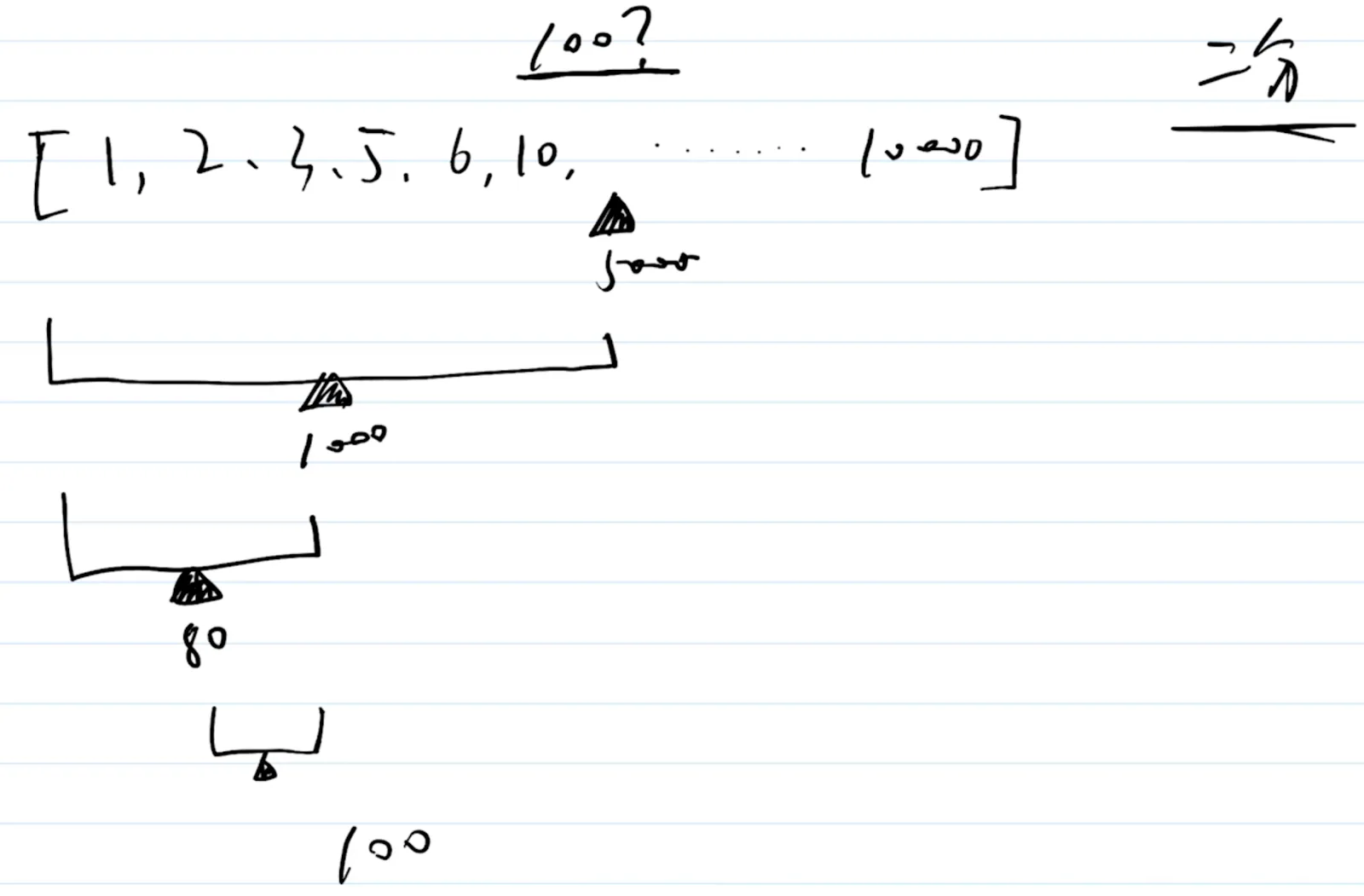
- 递归,代码逻辑更加清晰
- 非递归,性能更好
- 二分查找时间复杂度
O(logn)非常快
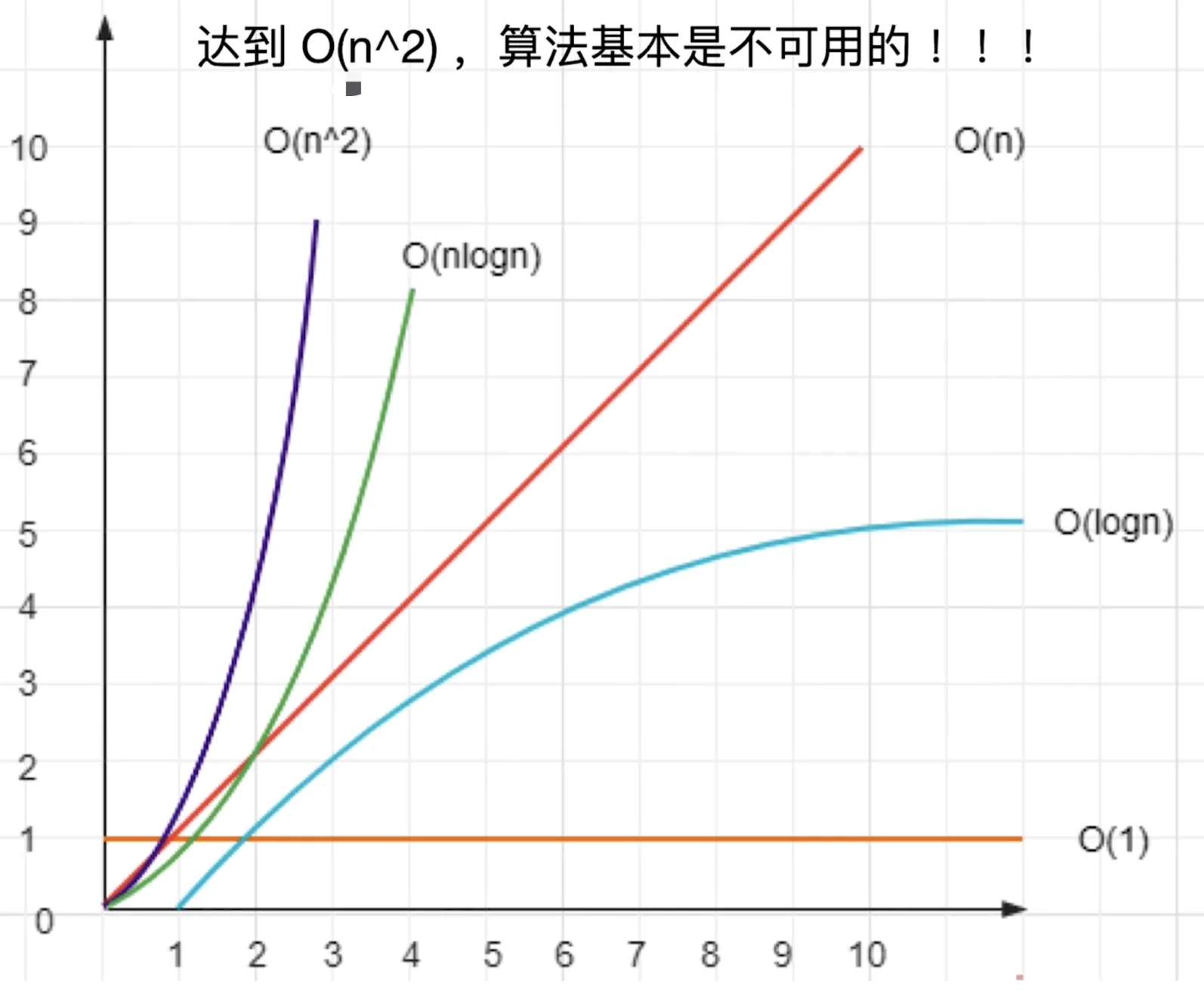
总结
- 只要是可排序的,都可以用二分查找
- 只要用二分的思想,时间复杂度必包含
O(logn)
二分查找(循环)
/**
* 二分查找(循环)
* @param arr arr:number[]
* @param target target:number 查找的目标值的索引
*/
function binarySearch1(arr, target) {
const length = arr.length
if (length === 0) return -1 // 找不到
// 
// startIndex、endIndex当前查找区域的开始和结束
let startIndex = 0 // 查找的开始位置
let endIndex = length - 1 // 查找的结束位置
// startIndex和endIndex还没有相交,还是有查找的范围的
while (startIndex <= endIndex) {
const midIndex = Math.floor((startIndex + endIndex) / 2)
const midValue = arr[midIndex] // 获取中间值
if (target < midValue) { // 查找的目标值小于中间值
// 目标值较小,则继续在左侧查找
endIndex = midIndex - 1
} else if (target > midValue) { // 查找的目标值大于中间值
// 目标值较大,则继续在右侧查找
startIndex = midIndex + 1
} else {
// 相等,返回目标值的索引
return midIndex
}
}
return -1 // startIndex和endIndex相交后还是找不到返回-1
}
二分查找(递归)
    /**
     * 二分查找(递归)
     * @param arr arr:number[]
     * @param target target:number 查找的目标值的索引
     * @param startIndex?:number start index 二分查找区间的开始位置
     * @param endIndex?:number end index 二分查找区间的结束位置
     */
    function binarySearch2(arr, target, startIndex, endIndex) {
      const length = arr.length
      if (length === 0) return -1

      // 开始和结束的范围
      if (startIndex == null) startIndex = 0
      if (endIndex == null) endIndex = length - 1

      // 如果 start 和 end 相遇,则结束
      if (startIndex > endIndex) return -1

      // 中间位置
      const midIndex = Math.floor((startIndex + endIndex) / 2)
      const midValue = arr[midIndex] // 中间值

      if (target < midValue) {
        // 目标值较小,则继续在左侧查找 endIndex = midIndex - 1 往左移动一点
        return binarySearch2(arr, target, startIndex, midIndex - 1)
      } else if (target > midValue) {
        // 目标值较大,则继续在右侧查找 startIndex = midIndex + 1 往右移动一点
        return binarySearch2(arr, target, midIndex + 1, endIndex)
      } else {
        // 相等,返回
        return midIndex
      }
    }
    // 功能测试
    const arr = [10, 20, 30, 40, 50, 60, 70, 80, 90, 100, 110, 120]
    const target = 40
    console.info(binarySearch2(arr, target))
    // 性能测试

    // 二分查找(循环)
    console.time('binarySearch1')
    for (let i = 0; i < 100 * 10000; i++) {
      binarySearch1(arr, target)
    }
    console.timeEnd('binarySearch1') // 17ms

    // 二分查找(递归)
    console.time('binarySearch2')
    for (let i = 0; i < 100 * 10000; i++) {
      binarySearch2(arr, target)
    }
    console.timeEnd('binarySearch2') // 34ms

    // 结论:二分查找(循环)比二分查找(递归)性能更好,递归过程多次调用函数导致性能慢一点
实现队列功能
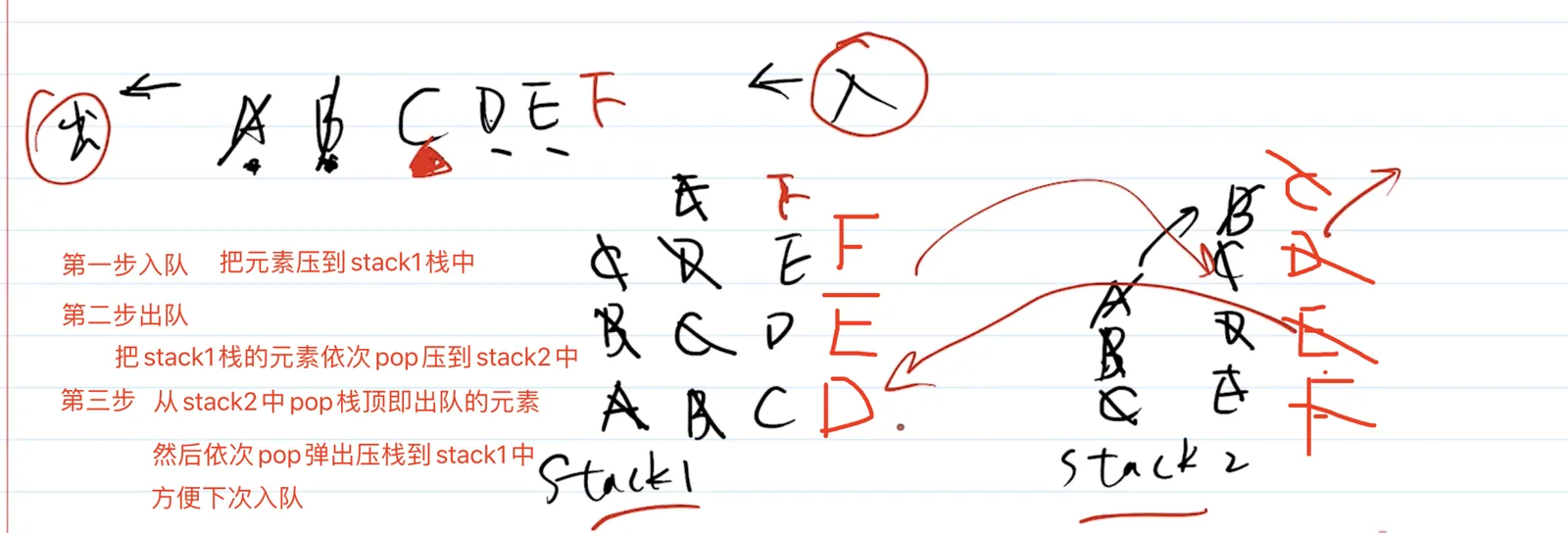
1. 请用两个栈,实现一个队列功能
功能
add/delete/length
- 数组实现队列,队列特点:先进先出
- 队列是逻辑结构,抽象模型,简单的可以用数组、链表来实现
    /**
     * @description 两个栈实现 - 一个队列功能
     */

    class MyQueue {
        stack1 = []
        stack2 = []

        /**
         * 入队
         * @param n n
         */
        add(n) {
          this.stack1.push(n)
        }

        /**
         * 出队
         */
        delete() {
          let res

          const stack1 = this.stack1
          const stack2 = this.stack2

          // 第一步:将 stack1 所有元素移动到 stack2 中
          while(stack1.length) {
              const n = stack1.pop()
              if (n != null) {
                  stack2.push(n)
              }
          }

          // 第二步:stack2 pop 出栈
          res = stack2.pop()

          // 第三步:将 stack2 所有元素“还给”stack1
          while(stack2.length) {
              const n = stack2.pop()
              if (n != null) {
                  stack1.push(n)
              }
          }

          return res || null
        }

        // 通过属性.length方式调用
        get length() {
          return this.stack1.length
        }
    }
    // 功能测试
    const q = new MyQueue()
    q.add(100)
    q.add(200)
    q.add(300)
    console.info(q.length)
    console.info(q.delete())
    console.info(q.length)
    console.info(q.delete())
    console.info(q.length)
性能分析:时间复杂度:
add O(1)、delate O(n)空间复杂度整体是O(n)
2. 使用链表实现队列
可能追问:链表和数组,哪个实现队列更快?
- 数组是连续存储,
push很快,shift很慢 - 链表:查询慢(把链表全部遍历一遍查询)时间复杂度:
O(n),新增和删除快(修改指针指向)时间复杂度:O(1) - 数组:查询快(根据下标)时间复杂度:
O(1),新增和删除慢(移动元素)时间复杂度:O(n) - 结论:
链表实现队列更快
思路分析
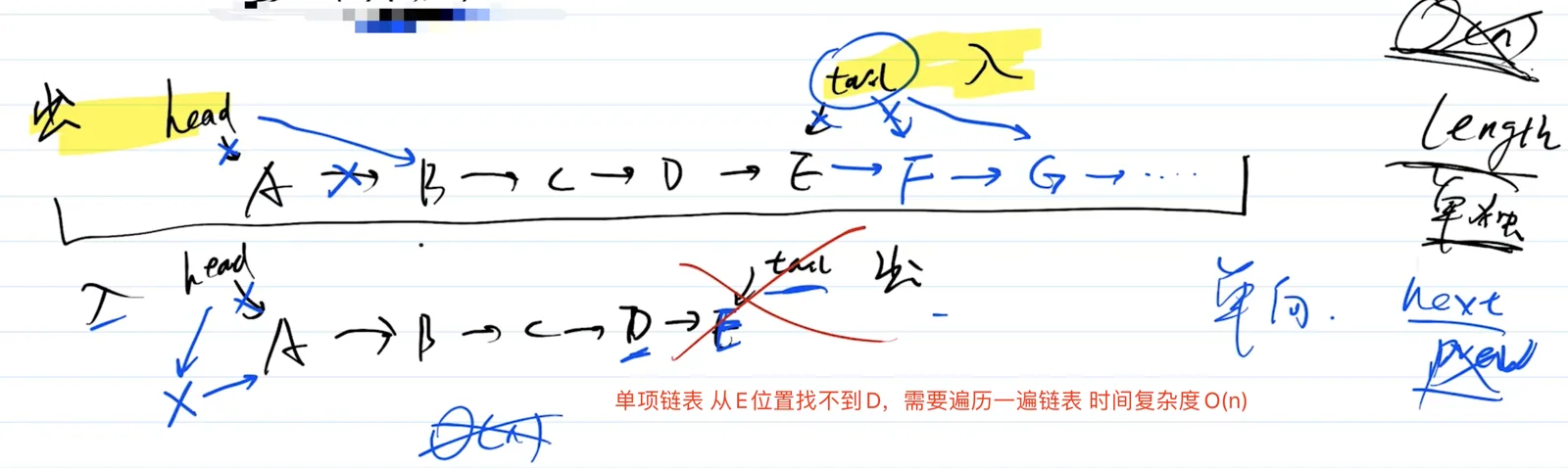
- 使用单项链表,但要同时记录
head和tail - 要从
tail入队,从head出队,否则出队时tail不好定位 length要实时记录单独存储,不可遍历链表获取length(否则遍历时间复杂度是O(n))
// 用链表实现队列
// 节点数据结构
interface IListNode {
value: number
next: IListNode | null
}
class MyQueue {
head = null // 头节点,从head出队
tail = null // 尾节点,从tail入队
len = 0 // 链表长度
/**
* 入队,在 tail 位置入队
* @param n number
*/
add(n) {
const newNode = {
value: n,
next: null,
}
// 处理 head,当前队列还是空的
if (this.head == null) {
this.head = newNode
}
// 处理 tail,把tail指向新的节点
const tailNode = this.tail // 当前最后一个节点
if (tailNode) {
tailNode.next = newNode // 当前最后一个节点的next指向新的节点
}
// 
// 把当前最后一个节点断开,指向新的节点
this.tail = newNode
// 记录长度
this.len++
}
/**
* 出队,在 head 位置出队
*/
delete() {
const headNode = this.head
if (headNode == null) return null
if (this.len <= 0) return null
// 取值
const value = headNode.value
// 处理 head指向下一个节点
// 
this.head = headNode.next
// 记录长度
this.len--
return value
}
get length() {
// length 要单独存储,不能遍历链表来获取(否则时间复杂度太高 O(n))
return this.len
}
}
    // 功能测试

    const q = new MyQueue()
    q.add(100)
    q.add(200)
    q.add(300)

    console.info('length1', q.length)
    console.log(q.delete())
    console.info('length2', q.length)
    console.log(q.delete())
    console.info('length3', q.length)
    console.log(q.delete())
    console.info('length4', q.length)
    console.log(q.delete())
    console.info('length5', q.length)
    // 性能测试

    var q1 = new MyQueue()
    console.time('queue with list')
    for (let i = 0; i < 10 * 10000; i++) {
      q1.add(i)
    }
    for (let i = 0; i < 10 * 10000; i++) {
      q1.delete()
    }
    console.timeEnd('queue with list') // 12ms

    // 数组模拟入队出队
    var q2 = []
    console.time('queue with array')
    for (let i = 0; i < 10 * 10000; i++) {
      q2.push(i) // 入队
    }
    for (let i = 0; i < 10 * 10000; i++) {
      q2.shift() // 出队
    }
    console.timeEnd('queue with array') // 425ms

    // 结论:同样的计算量,用数组和链表实现相差很多,数据量越大相差越多
手写判断一个字符串"{a(b[c]d)e}f"是否括号匹配
    /**
     * 判断是否括号匹配
     * @param str str
     */
    function matchBracket(str) {
        const length = str.length
        if (length === 0) return true

        const stack = []

        const leftSymbols = '{[('
        const rightSymbols = '}])'

        for (let i = 0; i < length; i++) {
            const s = str[i]

            if (leftSymbols.includes(s)) {
                // 左括号,压栈
                stack.push(s)
            } else if (rightSymbols.includes(s)) {
                // 右括号,判断栈顶(是否出栈)
                const top = stack[stack.length - 1]
                if (isMatch(top, s)) {
                    stack.pop()
                } else {
                    return false
                }
            }
        }

        return stack.length === 0
    }

    /**
     * 判断左右括号是否匹配
     * @param left 左括号
     * @param right 右括号
     */
    function isMatch(left, right) {
      if (left === '{' && right === '}') return true
      if (left === '[' && right === ']') return true
      if (left === '(' && right === ')') return true
      return false
    }

    // 功能测试
    // const str = '{a(b[c]d)e}f'
    // console.log(matchBracket(str))
利用栈先进后出的思想实现括号匹配,时间复杂度
O(n),空间复杂度O(n)